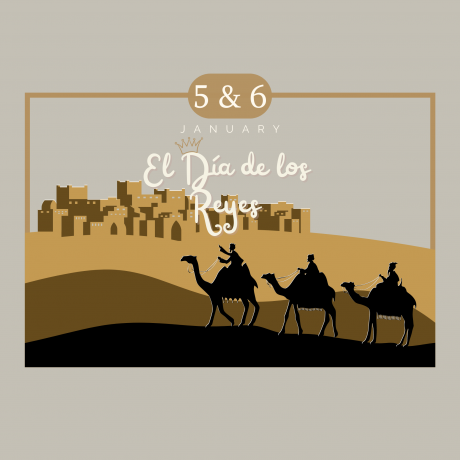
5th and 6th of January - El Día de los Reyes
El Día de los Reyes is one of the most important celebrations of the Christmas period, but it also marks the end of it too! Read on to find out about the importance of the Three Kings and why there is no Father Christmas in Spanish culture.
After New Years Eve, El Día de los Reyes is the next celebration.
The 6th of January commemorates the arrival of the three Kings, who brought presents for the baby Jesus.
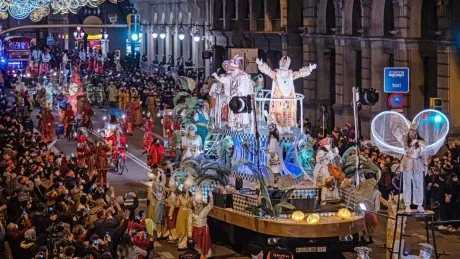
Although the 6th of January is the main day, the festivities begin on the evening of the 5th with a parade. On the 5th of January, families line the streets ready for arrival of the three kings. The Kings, Melchior, Gaspar, and Balthazar, arrive on horseback, camel, and elephant, depending on where they are in Spain. For example, in Barcelona, it is said that the Three Kings arrived on sea!
The parade began as a celebration for all, however, it has recently become just for children. But, this still doesn´t stop adults trying to catch the sweets thrown by the three Kings. Due to the young audience, the parade begins and ends early to allow the children to go to bed at a normal time.
However, before they go to sleep, they must prepare for the three Kings! Much like Christmas Eve traditions in England or America, children leave items out for the Three Kings. But, instead of mince pies and milk, in Spain children leave water and turrón or other sweets. Some children also leave hay for the Three Kings´ camels. In addition to this, and the most important thing, is to leave a pari of polished shoes outside the door. Although it may sound odd, it is custom to do so, so that the Kings know which presents to give to which child.
Much like Christmas lists to Father Christmas, in Spain it is customary to write and send a wish list on the 1st of January. But some children even leave it for the night before! Then when they see the Three Kings on the 5th, they hand it to them when they meet them.Much like Christmas lists to Father Christmas, in Spain it is customary to write and send a wish list on the 1st of January. But some children even leave it for the night before! Then when they see the Three Kings on the 5th, they give it to them in person.
The next morning, children come down stair to find presents underneath their shoes. Traditionally, the presents went inside the shoes but as many children´s gifts are larger than their shoe size, the shoes are placed above the presents instead.
The morning of the 6th is spent opening presents, much like Christmas Day in the US or the UK. Once presents have been opened, the important part of the day begins - the food!
After the parade the evening before, the food on El Día de los Reyes is the most important thing. Families gather around the table to enjoy traditional Spanish cuisine. There is no specific meal or plato principal for this day, however the most important plato for this day is the dessert!
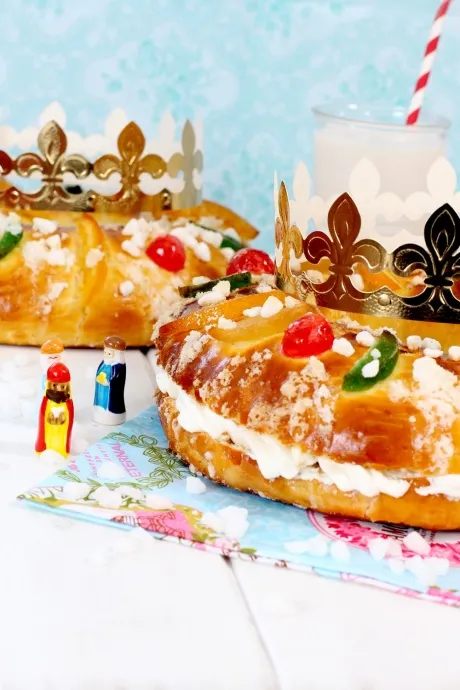
Instead of the popular turrón that is eaten throughout the Christmas period, El Roscón de Reyes is one of the most important aspects of the day. Brought out after the main meal, the round cake contains small figures baked into the dough. But, these figures are not the only things hidden in this cake! It is tradition to put a bean into the cake alongside the figures, but it has a lot higher significance than the other prizes. This bean, if found in your slice, crowns you as the King of the gathering. Occasionally though this bean is swapped to money or a small gift, so competition is heightened!
Unlike most Spanish meals, the Roscón de Reyes is usually bought instead of homemade. The preparation of this cake is seen as too advanced for beginner bakers, and so, due to the importance of this dish, it is almost always bought.