Navigating Spanish Language and Culture in Barcelona: 10 Spanish Customs That Surprise International Students
Choosing Barcelona as a place to learn Spanish in Barcelona quickly becomes about more than classes or textbooks. The city imposes its own rhythm, social codes, and daily habits that students must learn to read alongside the language itself.
Arriving in Barcelona to learn Spanish is an incredible adventure: a new city, a new language, new people and new customs too. Many students tell us that beyond grammar or pronunciation, what really surprises them is how everyday life works in Spain and Catalonia. To help you adapt, here’s a cultural survival guide with some of the small (and fun) differences you’ll notice from day one while studying Spanish in Barcelona.
Understanding these customs is not about 'fitting in' perfectly, but about reducing friction. The better you understand how daily life works, the faster you feel comfortable, confident, and able to communicate naturally. Language learning accelerates when you understand the social context in which it lives. The following guide outlines some of the everyday Spanish customs that most surprise international students navigating Spanish Language and Culture in Barcelona.
1. Spanish meal times
In Spain, lunch is late , and dinner is even later. Lunch usually takes place between 2:00 and 3:30 pm, while dinner rarely starts before 9:00 pm and often runs until 10:30 pm or later.
The first culture shock often comes when Spanish meal times are explained to international students. You might feel hungry at 12:30 pm, only to find restaurants still setting up tables. Don’t worry , you’ll soon understand why Spaniards eat dinner late. Meal schedules shape the rhythm of the entire day, from work hours to social life, and once you adapt to them, many other customs begin to make sense.
2. “Wanna get a drink?” doesn’t always mean alcohol
The phrase “tomar algo” doesn’t necessarily mean drinking alcohol. It can be a coffee, a beer, a soft drink, tea, or even sparkling water. It simply means meeting up to socialize.
If someone invites you to “tomar algo,” say yes. It’s a relaxed, low-pressure way to spend time with others and a perfect opportunity to practice Spanish. Social language often carries meaning beyond the literal words, and learning these expressions early helps prevent misunderstandings.
3. The Sacred sobremesa meaning
After eating, nobody rushes to leave the table. People talk, laugh, and tell stories for 30 minutes, an hour, or even longer. This is known as the sobremesa meaning , the time spent sitting at the table after a meal, talking and relaxing together.
In Spain, food is a social experience, not just a practical one. For students, sobremesa is one of the most natural environments to listen, observe, and speak Spanish without the pressure of “studying.”
4. Get ready to be kissed
In many countries, people greet each other with a handshake. In Spain, it’s usually kisses. Two kisses, one on each cheek, starting on the right, are common among friends, acquaintances, and sometimes even people you’ve just met.
If you’re unsure what to do, simply follow the other person’s lead. Physical closeness is cultural rather than personal, and understanding this helps avoid awkward moments.
5. Life is more laid-back
Punctuality exists in Spain, but it’s not an absolute rule in social situations. Arriving five to ten minutes late to an informal meeting is quite common. For classes and formal commitments, punctuality is still expected, but socially, flexibility is the norm.
This relaxed approach to time reflects a broader attitude in which relationships often take precedence over schedules.
6. Grocery shopping after 10 pm? Mission impossible
In Barcelona, many shops close relatively early, and most are closed on Sundays. Late-night grocery runs are not always possible.
The solution is to plan ahead or rely on small neighborhood shops and 24-hour supermarkets for emergencies. For students used to round-the-clock convenience, this adjustment becomes second nature surprisingly quickly.
7. Not everyone speaks Catalan, but you’ll hear it a lot
Catalonia has two official languages: Spanish and Catalan. You’ll see signs in Catalan and hear greetings like “Bon dia” regularly.
Don’t worry , most people will automatically switch to Spanish when they realize you’re a foreigner. Even if your main goal is studying Spanish in Barcelona, exposure to Catalan adds an extra layer to cultural understanding.
8. Life happens outdoors
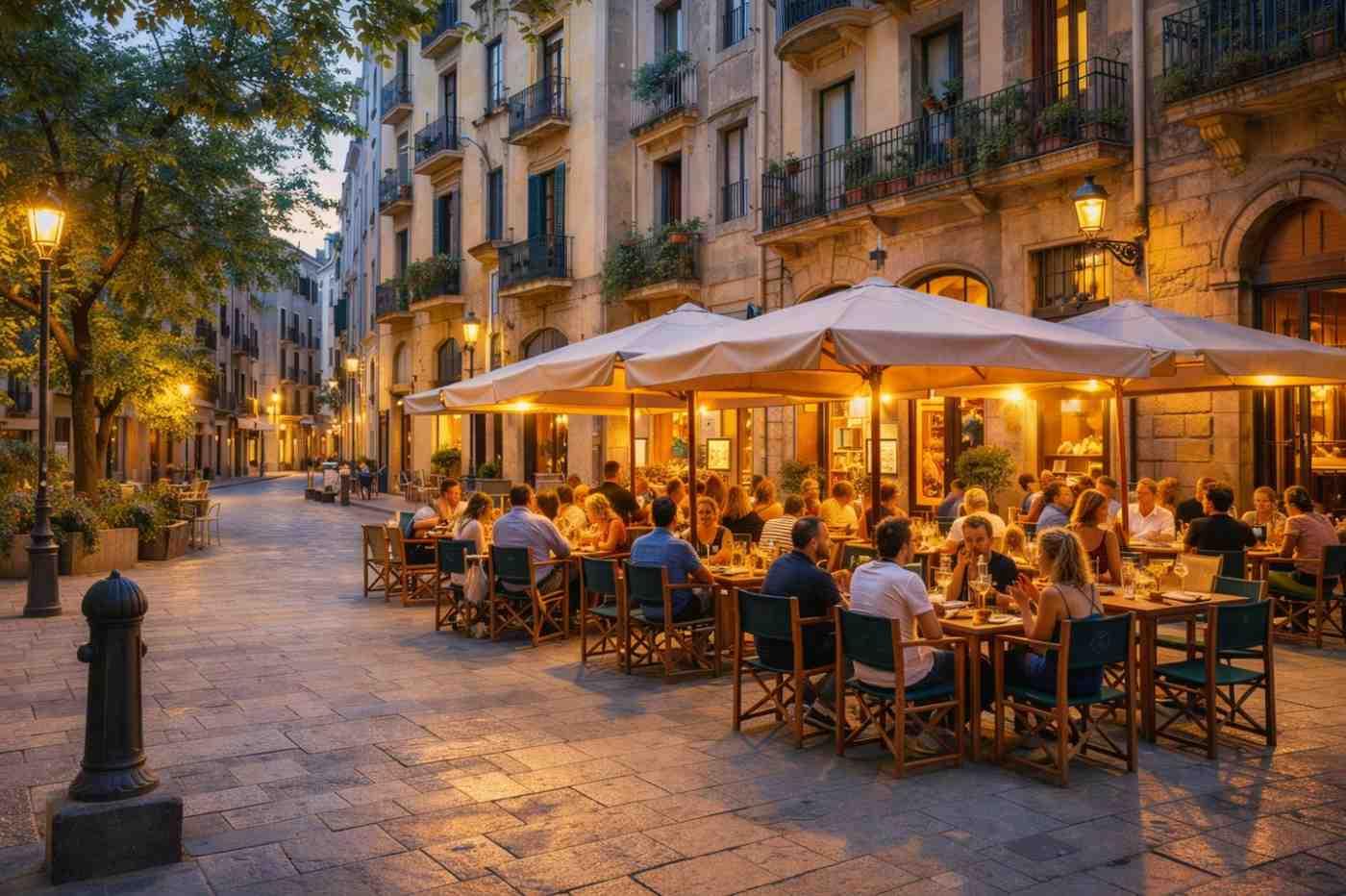
Terraces are full even in winter, people eat outside whenever possible, and children play in public squares until late at night. Barcelona’s Mediterranean climate encourages outdoor social life.
These shared public spaces become natural places to listen, observe, and practice Spanish without even realizing it.
9. People are warm and expressive
Spaniards tend to be expressive, use plenty of gestures, and get emotionally involved in conversations. Don’t be surprised if a stranger offers help without being asked or if a waiter enthusiastically recommends their favorite dish.
This warmth often compensates for linguistic gaps , communication happens even when vocabulary is limited.
10. Festival season never ends
Sant Jordi, La Mercè, Castellers, Sant Joan’s Eve, Tres Tombs etc. Barcelona celebrates all year round. Spanish festivals and traditions are one of the best ways to experience Spanish Language and Culture in Barcelona while practicing the language.
They combine history, food, tradition, and community into a single experience, and missing them means missing an essential part of the city.
Final tips to survive (and enjoy)
These are some of the things you’ll come across on your journey to learn Spanish in Barcelona:
-
Observe, ask questions, and take part.
-
Don’t worry about “what people will think” , nothing really shocks anyone here.
-
Laugh at cultural misunderstandings: every student goes through them.
-
And above all: live Barcelona like a local.
At Camino Barcelona Spanish Language School, you don’t just learn Spanish - you experience Barcelona and its culture every day. Ready to live it yourself? Use the form below to see our course options and get instant prices.
Vocabulary List: Spanish Language & Culture in Barcelona
Daily Life & Social Customs
tomar algo - Literally “to have something”; means meeting up to socialize, not necessarily to drink alcohol
sobremesa - The time spent sitting and talking at the table after a meal
Language & Regional Context
Catalan - Co-official language spoken in Catalonia alongside Spanish
Bon dia - Catalan greeting meaning “Good morning”
Festivals & Traditions
Sant Jordi - Cultural festival celebrated in Barcelona
La Mercè - Barcelona’s main annual city festival
Castellers - Traditional Catalan human towers
Sant Joan’s Eve - Celebration marking the summer solstice
Tres Tombs - Traditional Catalan festival