Student Visa for Spain: The Complete 2026 Guide for Long-Term Spanish Courses in Barcelona
Picture this: you’ve decided to spend six months in Barcelona learning Spanish. You’ve found the school, you’ve found the course, and you can already picture yourself ordering a café con leche on Calle Diputación before your 9:30 class. Then you Google “student visa Spain,” and the whole picture gets complicated fast - IPREM, apostilles, empadronamiento, consular jurisdiction. Words that sound more like an exam than an adventure.
Here’s the truth, though: thousands of students go through this exact process every year, and almost none of them are visa experts, lawyers, or immigration specialists. They’re students. Just like you. The process has a clear order, a known timeline, and a fixed list of documents. Once you see it laid out step by step, it stops feeling like a wall and starts looking like a checklist you can actually work through.
For anyone planning to apply for a Spanish language student visa to study at Camino Barcelona, here’s everything you need, in the order you’ll actually need it. From choosing a course at a trusted school in Barcelona, all the way to arriving in Spain and picking up your TIE (Tarjeta de Identidad de Extranjero) card (that’s the Spanish residency permit).
Do You Need a Student Visa to Study Spanish in Spain?
If you’re a non-EU/EEA citizen and your course runs longer than 90 days, yes, you’ll need one. Shorter courses, under three months, can usually be done on a tourist visa or a visa-free stay depending on your nationality. But if your course crosses that 90-day line, you need to apply before you arrive at the Spanish consulate in your country of residence.
To qualify, Spanish consulates require enrolment in a full-time, in-person intensive course of at least 20 lessons a week. At Camino Barcelona, three long-term Spanish course schedules tick that box:
|
Course Name |
Weekly Lessons |
Schedule |
Days |
Target Levels |
Beginner Start Dates |
|
20 lessons/week |
09:30 – 13:10 |
Mon – Fri |
All levels (A0 to C1) |
Any Monday of the year |
|
|
20 lessons/week |
13:40 – 17:30 |
Mon – Fri |
All levels (A0 to C1) |
1st & 3rd Monday of each month |
|
|
20 lessons/week |
15:30 – 20:00 (2 days) 15:30 – 17:50 (3 days) |
Mon – Fri |
All levels (A0 to C1) |
2nd Monday of each month |
One thing worth knowing before you pick a schedule: progress on the Morning course moves roughly twice as fast as it does on Afternoon or Evening. Which is also why the Morning course costs a little more. If your visa case leans heavily on demonstrating real study progress, that’s worth weighing. You can compare every course price on our Prices page.
Spain Student Visa Requirements: The Full Document Checklist
Every consulate tweaks things slightly, so it’s always worth checking the requirements page for the specific consulate where you’ll apply, the official Spanish Ministry of Foreign Affairs consulate locator will point you to it. That said, across nearly every Spanish consulate, the core Spain student visa requirements look like this:
|
Category |
Required Document |
Critical Rules & Parameters |
Required Format |
|
Application & Fees |
Visa Application Form |
Supplied by consular section; must be completed and signed. |
Original + 1 photocopy |
|
Application & Fees |
Visa Fee Payment |
Proof of payment required. |
Receipt / Bank proof |
|
Identification |
Passport |
• Valid at least 3 months past study end date |
Original + photocopy of EVERY page |
|
Identification |
Passport Photos |
• Two recent photos (taken within last 6 months) |
2 Physical Copies |
|
Identification |
Proof of Residence |
Must prove residence within the specific consulate's jurisdiction. |
According to local consulate rules |
|
Academic & Intent |
Study Center Documents |
Official acceptance / enrollment documents from accredited institutions (e.g., Camino Barcelona). |
Original + photocopy |
|
Academic & Intent |
Prior Academic Credentials |
Certificate of studies already completed in home country. |
Original / Official Copy |
|
Academic & Intent |
Language Proficiency |
Certificate of current Spanish level (if applicable). |
Official Certificate |
|
Academic & Intent |
Motivation Letter |
Personal statement detailing intent and commitment to the course. |
Personal Letter |
|
Financial & Housing |
Proof of Financial Means |
• Minimum: 100% of monthly IPREM × study duration |
Official financial records |
|
Financial & Housing |
Proof of Accommodation |
• Reservation + proof of full payment |
Official booking confirmation |
|
Health & Legal |
Health Insurance Certificate |
• Must be from an insurer authorized to operate in Spain |
Official Certificate |
|
Health & Legal |
Medical Certificate |
• Issued within last 90 days |
Signed original (+ translation if applicable) |
|
Health & Legal |
Criminal Record Check |
• Required from every country lived in over past 5 years |
Official background check |
How Camino Barcelona Supports Your Visa Application
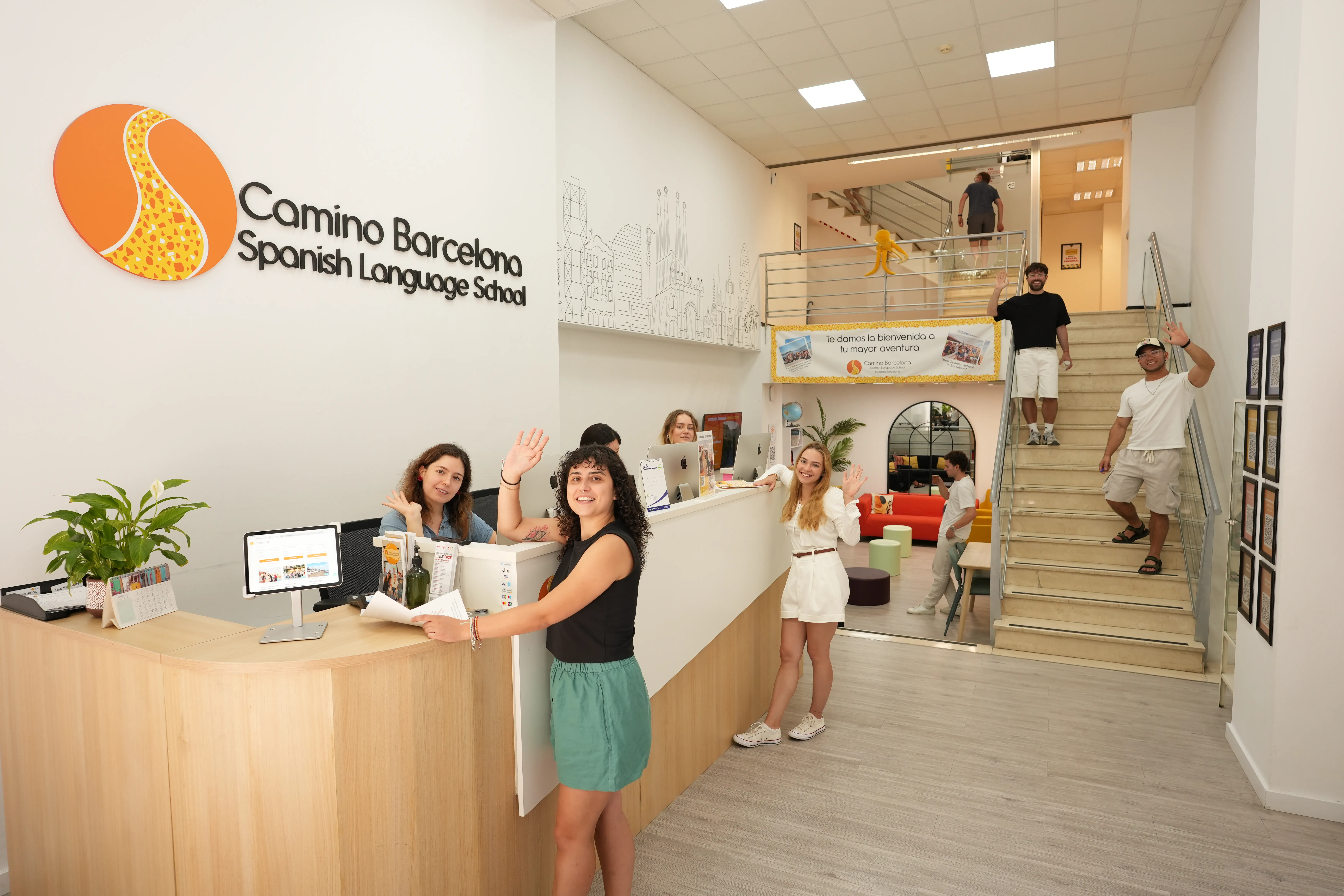
This is where working with a Cervantes-accredited school actually pays off. Once your course is booked and paid in full, Camino Barcelona turns your visa documents around the same day. So you’re not stuck waiting weeks for paperwork your whole consulate appointment hinges on.
Here’s what you’ll get:
- Invitation letter: the certificate of admission for your full-time, in-person course (plus accommodation, if you’ve booked it).
- Receipt of full payment: your certificate confirming the course is paid for.
- Study plan: the training program itself, laying out what you’ll cover at every level during your course.
Book four weeks or more of accommodation with us, and that shows up on your invitation letter too, which only strengthens your application, since most consulates want proof of at least one month’s accommodation.
Ready to get moving? You can check course availability and book directly here.
Studying Spanish in Barcelona: Camino Statistics and Immersive Learning

Before committing to a school, it’s worth seeing who’s walked this path before you. That is, looking at the numbers behind the claims, not just the claims themselves. Camino Barcelona’s student numbers have climbed steadily, year after year:
|
2023 |
2024 |
2025 |
|
4,103 students |
4,895 students |
5,260 students |
That growth is exactly why Camino Barcelona publishes its own student data: age ranges, nationalities, course numbers from the last 12 months on our Camino Statistics page.
It’s a plain, transparent way to check whether a school’s visa-support claims actually hold up, and it’s a big reason so many students pick Camino for immersive Spanish learning rather than a strictly classroom-based course.
That immersion is built into the course itself, not bolted on afterward: daily, teacher-led cultural activities, on-site or nearby accommodation, and a curriculum centered on real conversation from lesson one, not endless grammar drills. It’s why students so often describe learning Spanish in Barcelona with Camino as feeling less like sitting in class and more like actually living the language.
Document Legalization and Translation
Any public document issued outside Spain has to be legalized before a consulate will even look at it. If your country signed the 1961 Hague Convention, that means an apostille. If it didn’t, you’re looking at diplomatic legalization instead; through the Spanish consular office abroad and the Ministry of Foreign Affairs.
Legalizing documents in your home country is a two-step process: first through your own country’s Ministry of Foreign Affairs, then through the Spanish Consular Office (which has its own fee).
Anything not originally written in Spanish also needs translating by a sworn translator certified by the Spanish government. Most consulates keep their own list of approved translators for this exact purpose, and if you need to double-check someone’s accreditation, the Spanish Ministry of Foreign Affairs keeps the official register of sworn translators.
How to Get a Spanish Student Visa: Who Applies, and Where
You apply in person, or, if you’re a minor, a parent applies for you. A duly accredited representative with notarized authorization can also apply on your behalf.
Your application goes to whichever Spanish consulate or embassy has jurisdiction over where you live, and it’s always by appointment. No consulate takes walk-ins for student visas. Use the official consulate locator to find your office and book directly through their site.
If you’re wondering exactly how to get a Spanish student visa without hitting delays, here’s the short version:
- Check your consulate’s specific requirements early
- Gather your documents in the order above, and don’t leave the slowest pieces: medical certificate, criminal record checks, apostilles - until the last minute.
Spanish Student Visa Timeline: When to Start
We generally recommend starting your visa application process around 3-6 months before your course start date, depending on the Spanish consulate responsible for your application. Some documents, medical certificates, criminal record checks take 2 to 4 weeks to obtain on their own, and you'll need every single one in hand on appointment day.
Please make sure to submit your application in good time, which in most cases should be no later than 2 months before your course begins. We also strongly advise checking the exact timeline directly with your local Spanish consulate, as procedures and appointment availability can vary.
What Happens If Your Visa Is Rejected?
If your visa gets rejected after you’ve submitted everything, Camino Barcelona refunds all fees paid, minus a €500 admin fee. Just email us a scanned copy of the rejection letter and submit your refund request in writing.
Would rather appeal first? That’s an option too; and if the appeal also gets rejected, the same refund process kicks in. Refunds can take up to three months to process.
One thing to keep in mind: once your visa is approved, the booking becomes non-refundable, so make sure your dates and course choice are locked in before you submit.
Understand the full cancellation and refund policy in Terms & Conditions.
You’ve Landed in Barcelona: Now What? TIE Card, NIE, and Empadronamiento
Your student visa is typically only valid for three months, because the document you’ll actually use day to day is the TIE (Tarjeta de Identidad de Extranjero). Here’s the part a lot of students don’t realize until they’re already here: you’ve got 30 days from entering the Schengen Area to apply for it.
To book your TIE appointment at the Immigration Office (“Extranjería”) or Police Office (“Comisaría de Policía”), use the official Spanish government appointment portal, and bring:
- Your passport, with the visa stamped inside.
- A recent color photo on a white background, “tamaño carné” size.
- A completed Modelo EX17 application form for the foreigner’s ID card.
- Proof you’ve paid “Tasa Modelo 790, Código 012.” Choose “TIE que documenta la primera concesión de la autorización de residencia temporal, de estancia o para trabajadores transfronterizos.” You can pay it here.
- Your empadronamiento certificate, proving your address in Spain.
The empadronamiento is its own separate little mission, requested at the city hall (“Ayuntamiento”) covering wherever you live, by appointment, through the Barcelona City Council’s official appointment system.
Documents Required for Your Empadronamiento Appointment
- Proof of Residence: Bring the original rental contract and a photocopy, along with your most recent payment receipt.
- Alternative Authorization: If you do not have a rental contract, provide a signed authorization from your landlord accompanied by their ID.
- Your Identification: Bring your original passport and a photocopy.
- Application Form: Ensure you have a completed empadronamiento request form.
Important Process Notes
- Official Process Details: Find the complete procedure and scheduling information at the Barcelona City Council official site.
- Proving Residence Without a Permanent Address: If you are still securing permanent housing, follow the alternative registration process by contacting city hall directly.
- Issuance of the TIE: Once your empadronamiento is complete and your fingerprints are collected at your TIE appointment, your residency card will be issued. This card serves as your primary form of ID in Spain for the duration of your studies.
What’s Included in Your Camino Barcelona Course Price
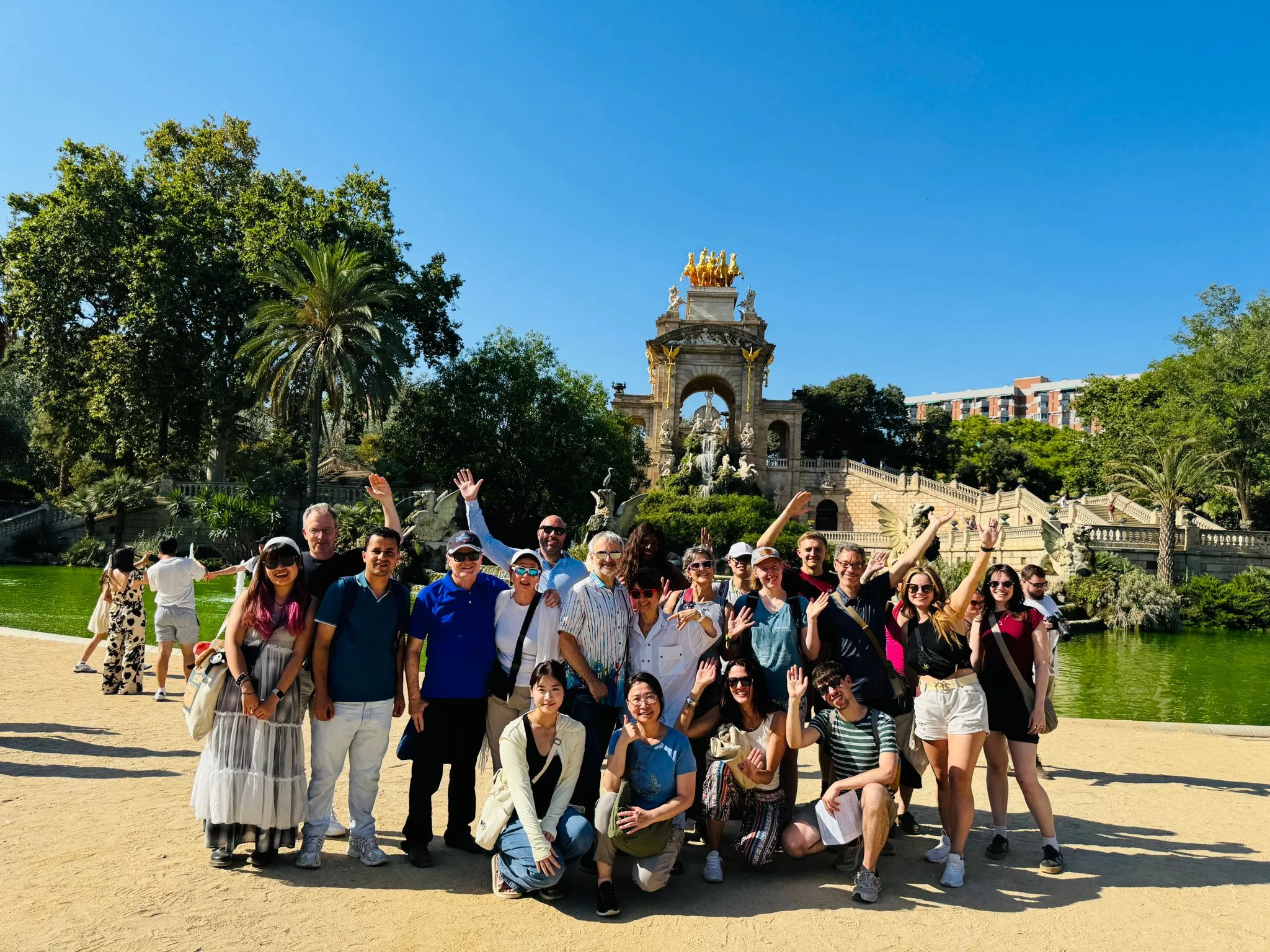
The course itself is only part of what you’re paying for, so here’s exactly what’s covered:
- Spanish course taught by native, professionally trained teachers who balance conversation, grammar, listening, and writing so your progress stays fast and well-rounded, not lopsided.
- 7 cultural activities a week, every single one led by a teacher. The most extensive activities program of any language school in Barcelona.
- Think paella cooking, wine tasting, salsa nights, night walks, bike and boat trips, live flamenco and salsa, trips to La Boquería market and Gaudí’s Modernist Route, plus full weekend excursions outside the city.
- Around 70% cost nothing at all; the rest only carry a small ticket price. Check out videos and photos from our activities programme.
- Afternoon Club, running daily from 16:30 to 17:30 up to 5 hours a week of extra teacher-led practice, Monday to Friday, tailored to whatever you need most: grammar, speaking, listening, reading, writing, homework help, exam prep, you name it.
- You’ll also get access to extra self-study materials like Spanish films, newspapers, books, and online learning tools.
- Access varies a bit by course: Morning students attend after their lessons, Afternoon students have it worked into their schedule, and Evening students get their own version from 15:30 to 16:15. Full details on our Afternoon Club page.
- A level test, study materials, and an achievement certificate once you finish your course.
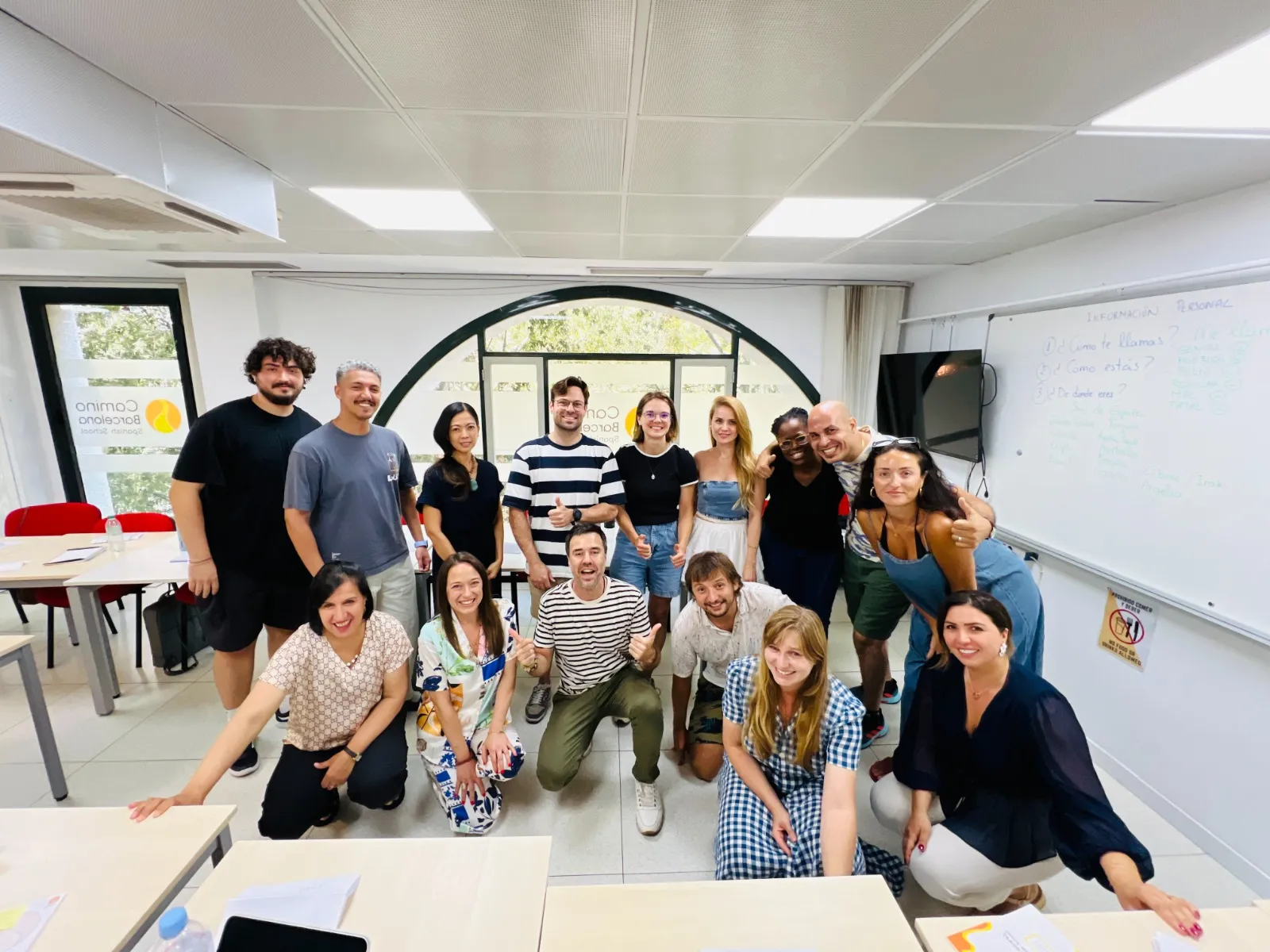
- Newly refurbished, air-conditioned classrooms with heating, big desks, and plenty of natural light, right in the center of Barcelona, minutes from Plaza Cataluña, Casa Batlló, Las Ramblas, the Gothic Quarter, Plaza España, and Passeig de Gràcia.
- Top-tier Cervantes accreditation. Camino Barcelona has been accredited by the Cervantes Institute since 2013, ensuring the highest standards of quality in Spanish language teaching, teacher qualifications, facilities, customer service, and ongoing improvement.
Choosing Your Course Duration and Visa Length
Here’s something most students don’t expect going in: your visa duration doesn’t actually have to match your study duration exactly. If part of the plan is to travel around Spain or across Europe, Camino can build free holiday weeks right into your visa letter. Those weeks still count toward your visa duration, but you won’t pay tuition for them, which can bring your total course cost down noticeably.
For the Morning Intensive Course, the three combinations students choose most often are:
- 22 weeks of course plus 5 weeks of free holidays, for a 27-week visa. You’ll land around the start of B2 from a beginner level.
- 32 weeks of course plus 8 weeks of free holidays, for a 40-week visa. You’ll get close to finishing B2 from a beginner level.
- 42 weeks of course plus 10 weeks of free holidays, for a 52-week visa. You’ll reach somewhere around the middle of C1 from a beginner level.
For the Afternoon and Evening Intensive Courses, the same week structures apply, just with somewhat slower progress given the schedule:
- 22 weeks of course plus 5 weeks of free holidays, for a 27-week visa, you’ll reach the start of B1.
- 32 weeks of course plus 8 weeks of free holidays, for a 40-week visa, you’ll land around the middle of B1.
- 42 weeks of course plus 10 weeks of free holidays, for a 52-week visa, you’ll reach the start of B2 from a beginner level.
You can take your holiday weeks all in one stretch, or split them up across your stay, whatever works best for travel, visiting home, or just taking a breather from studying. And if you’d rather pour your whole visa duration into improving your Spanish, you’re not obligated to take any holiday weeks at all.
Can I Work With a Spanish Student Visa?
Technically, yes. You can get authorization to work up to 30 hours a week while on a student visa. It’s just not automatic, and it’s not especially easy. Your visa being approved doesn’t come with a work permit attached; you’ll need to apply separately for one (autorización para trabajar) once you’re already in Spain.
And in practice, that permit is genuinely hard to land, because you need a company willing to put in the time and effort to request it on your behalf. The employer has to submit the application, meet a handful of legal requirements, and stick with a process that can drag on, which is exactly why plenty of companies would rather not bother. That said, the stronger and more relevant your professional background, the better your odds of finding someone willing to go through it with you.
Worth flagging too: the authorization itself usually takes 4 to 5 months to come through, so even once you’ve found a company ready to hire you, don’t expect to start working right away.
If working is genuinely part of your plan, confirm the latest rules directly with your consulate, or with the Extranjería once you’ve arrived. Work-permission rules are one of the things Spanish authorities update most often. The Spanish Immigration Ministry’s official portal is the most reliable place to check what’s currently in effect.
Renewing or Extending Your Spanish Student Visa
Planning to keep studying past your initial visa period? You’re entitled to one residency extension through the same language course. The renewal itself happens from inside Spain, not back at your home consulate. Broadly, a Spanish student visa extension calls for proof you’re still enrolled in an intensive course, evidence you’re actually making academic progress, the same kind of financial documentation as your first application, and valid health insurance for the new period.
Camino Barcelona can issue updated enrolment and payment documents for a renewal, just like we do for a first application. Reach out before your current authorization runs out, since renewal applications have to go in within the window Extranjería sets.
You can check current windows and procedures through the official Extranjería appointment portal.
Where You’ll Live: Camino Barcelona Accommodation
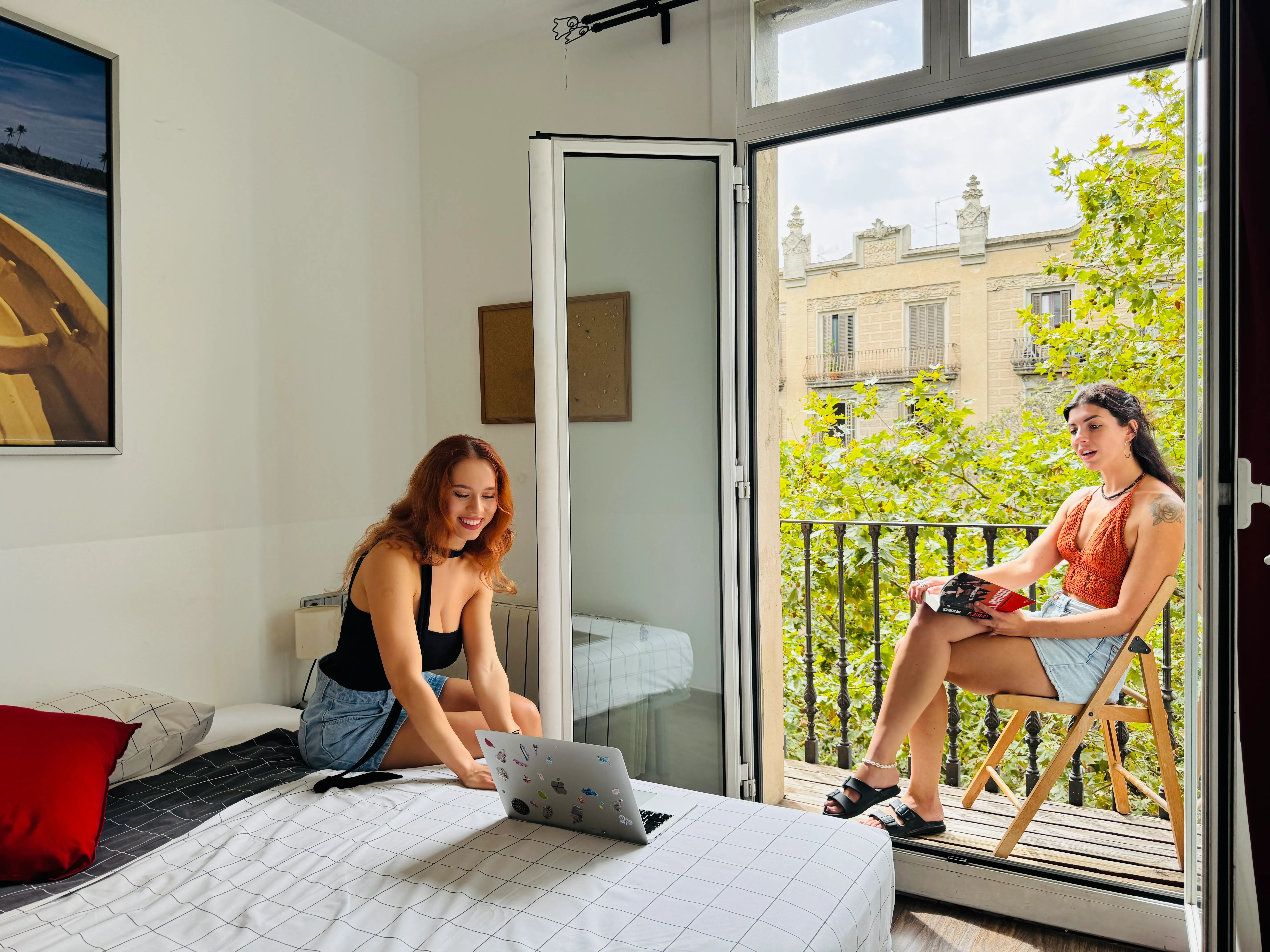
A booked place to stay isn’t just about comfort, it’s part of your visa file too. Camino offers two accommodation types:
- Student Shared Apartments, 2 to 25 minutes’ walk from the school.
- Spanish Host Families, anywhere from a 2-minute walk to 30 minutes by public transport.
- Our Student Apartments are the most popular pick, including our Camino Campus with 12 apartments in one building just 100 meters from the school, used exclusively for the Camino students:
- Single or shared rooms, private or shared bathrooms, some with balconies, many with access to big terraces where students study, hang out, and unwind.
- Every apartment is air-conditioned (though not necessarily every individual room), newly refurbished, and fully equipped.
- Kitchen with a stove, big fridge, washing machine, kettle, toaster, cookware, plus a living room with a TV.
- Towels, bedding, and weekly cleaning are all included, no extra cost.
Booking at least four weeks with Camino does double duty: you get a comfortable, central base while you look for something longer-term, and it strengthens your visa file, since most consulates want proof of accommodation for at least your first month.
What Our Students Say
Document checklists and numbers only get you so far. The rest comes from students who’ve actually lived through this process and made it to their first day of class in Barcelona.
Your Next Step
Whether you’re aiming for 27, 40, or 52 weeks in Barcelona, the path looks the same:
- Pick your course
- Get your documents from Camino
- Book your consulate appointment 2 to 3 months out, and let the city handle the rest.
At some point, Spanish stops being something you study and starts being something you live with - in your classroom, in your apartment, at your TIE appointment, in every conversation along the way.
Ready to get started? Book your course and request your visa documents here, and our team will walk you through everything, from your first consulate appointment to your first day of class.