8th December Across Spain: Inmaculada Concepción and the Kickoff to Christmas Celebrations
If you’re in Barcelona in December as a Camino student, you feel it instantly. Christmas doesn’t arrive quietly in Catalonia, it takes over. By 8 December the lights, markets, and celebrations make the city come alive. El Día de la Inmaculada Concepción marks the moment the festive season fully awakens, and you see why locals love it.
What Is El Día de la Inmaculada Concepción?
Every 8 December, Spain honours the Virgin Mary. It is not a day of large parades or dramatic ceremonies, but a quieter and surprisingly beautiful celebration.
This day remembers the belief that Mary was conceived without original sin, making her the spiritual centre of the Christmas story.
Even if you are not religious, you will understand why the day matters. Across Spain, Mary represents warmth, kindness and family. These values shape the entire holiday season. Many Spanish homes display her image with affection, and for Catalan families, the 8th feels like the true beginning of Christmas.
It is the spark that lights everything that comes after.
Why 8th December Still Matters Today
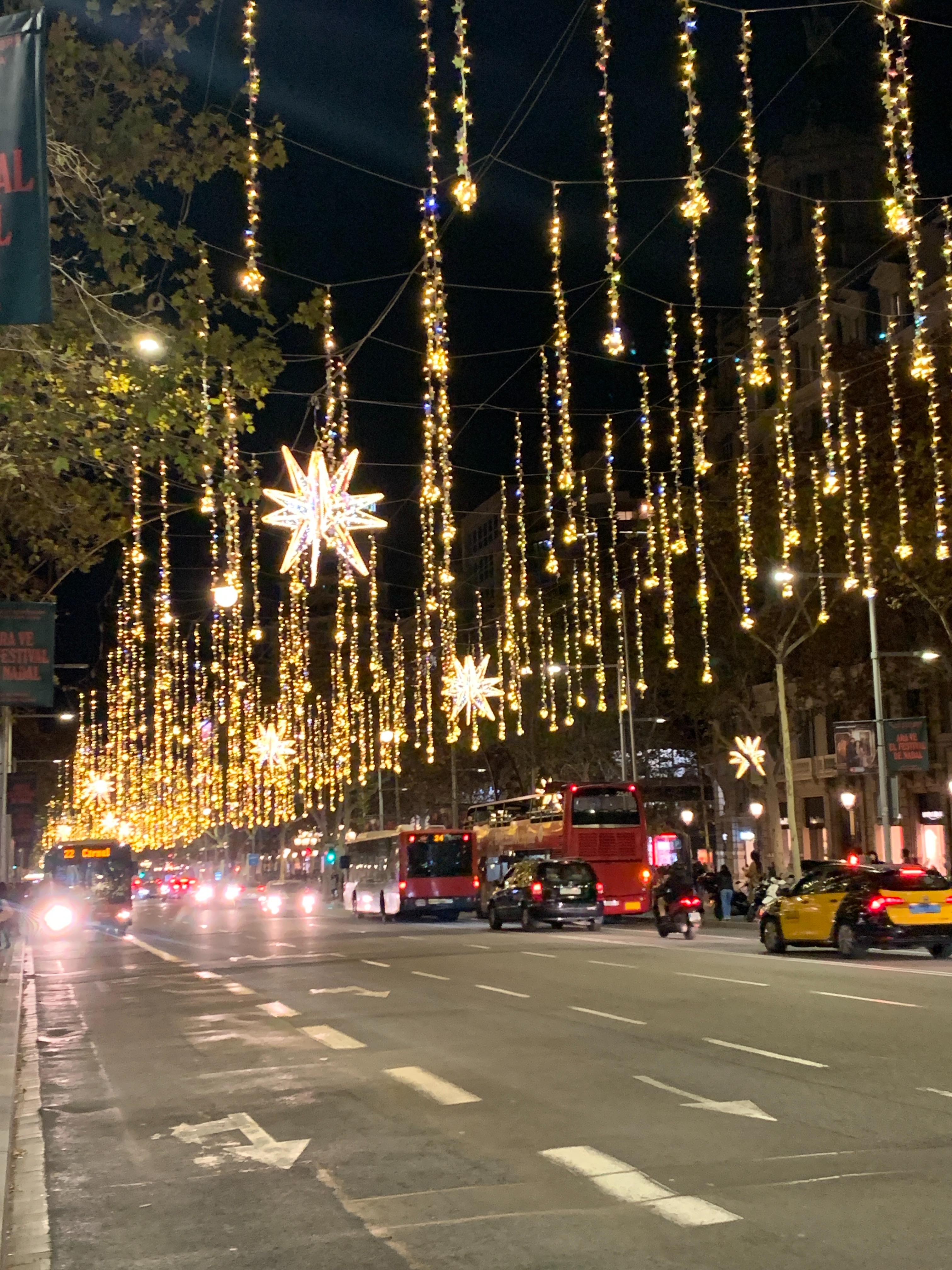
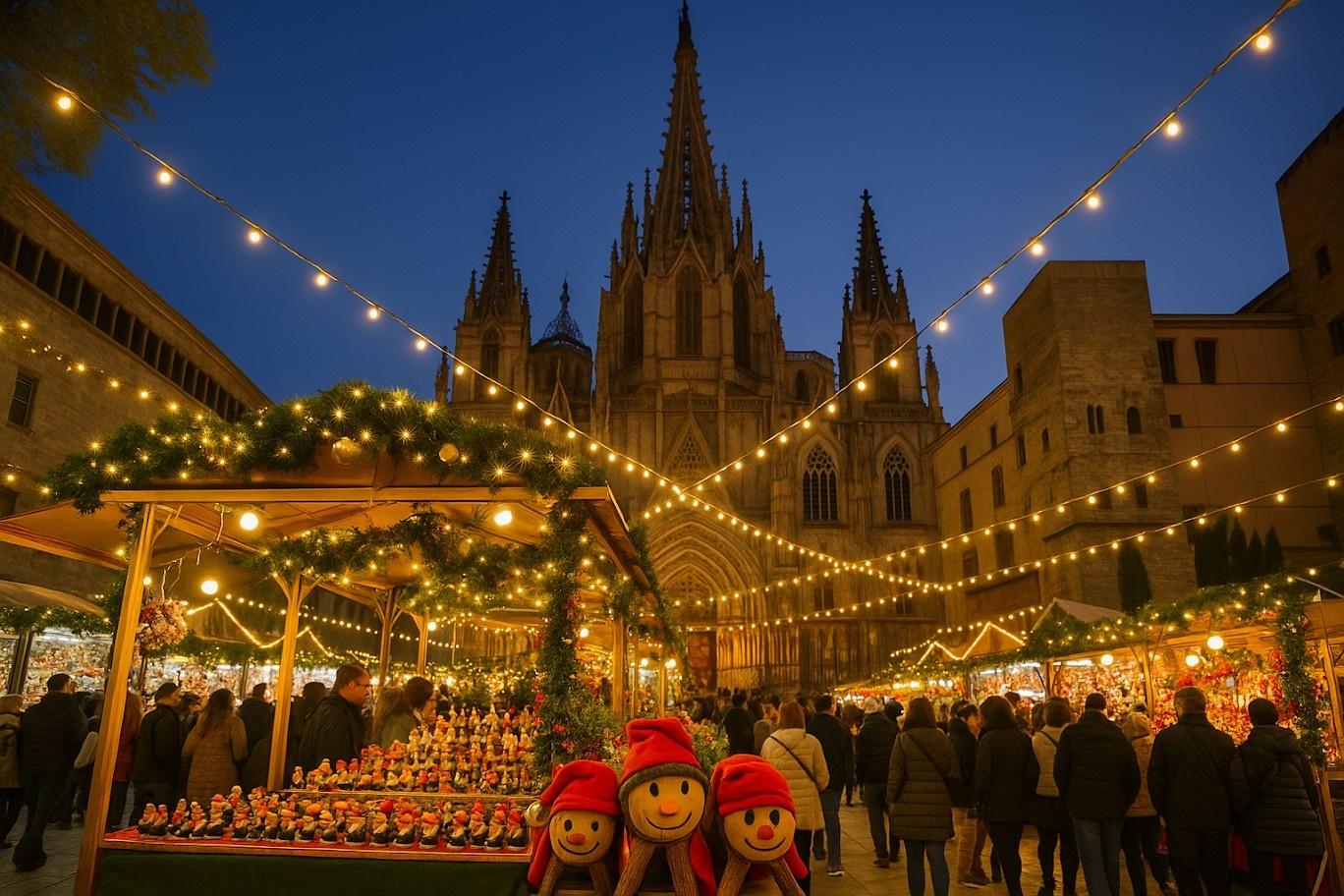
Even with modern life moving quickly, this day keeps its importance. When you walk outside, you feel how the city transforms. Families begin decorating their homes. Nativity scenes, called pessebres, appear in windows and public squares. Caganers and Caga Tió logs fill Christmas stalls. Lights illuminate Passeig de Gràcia, the Gothic Quarter and the entire centre. The Santa Llúcia Market becomes fully active. It feels less like a holiday and more like an invitation: “Welcome to the season. Come be part of it.”
For Camino students, this is one of the best days to experience Spain outside the classroom, because the whole city becomes your teacher.
The Puente de Diciembre (6 to 8 December)
Every 8 December, Spain honours the Virgin Mary. It is not a day of large parades or dramatic ceremonies, but a quieter and surprisingly beautiful celebration.
This day remembers the belief that Mary was conceived without original sin, making her the spiritual centre of the Christmas story.
Even if you are not religious, you will understand why the day matters. Across Spain, Mary represents warmth, kindness and family. These values shape the entire holiday season. Many Spanish homes display her image with affection, and for Catalan families, the 8th feels like the true beginning of Christmas.
It is the spark that lights everything that comes after.
How Barcelona Celebrates This Day
Barcelona celebrates the 8th of December with a calm but magical spirit.
Christmas Lights
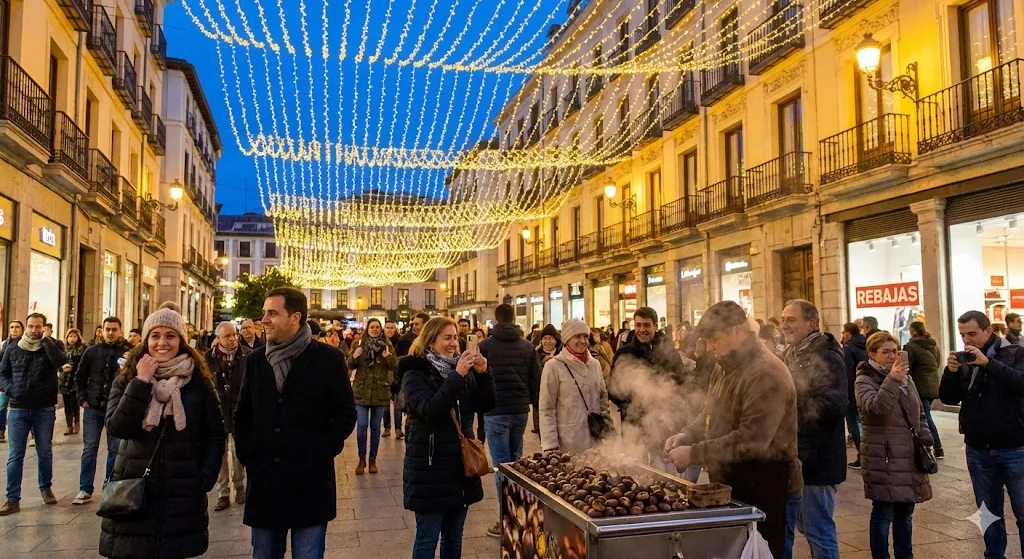
By early December, the city’s light displays are fully shining. Passeig de Gràcia sparkles, the Gothic Quarter glows softly and Plaça Catalunya becomes the centre of the season.
Special Masses and Celebrations
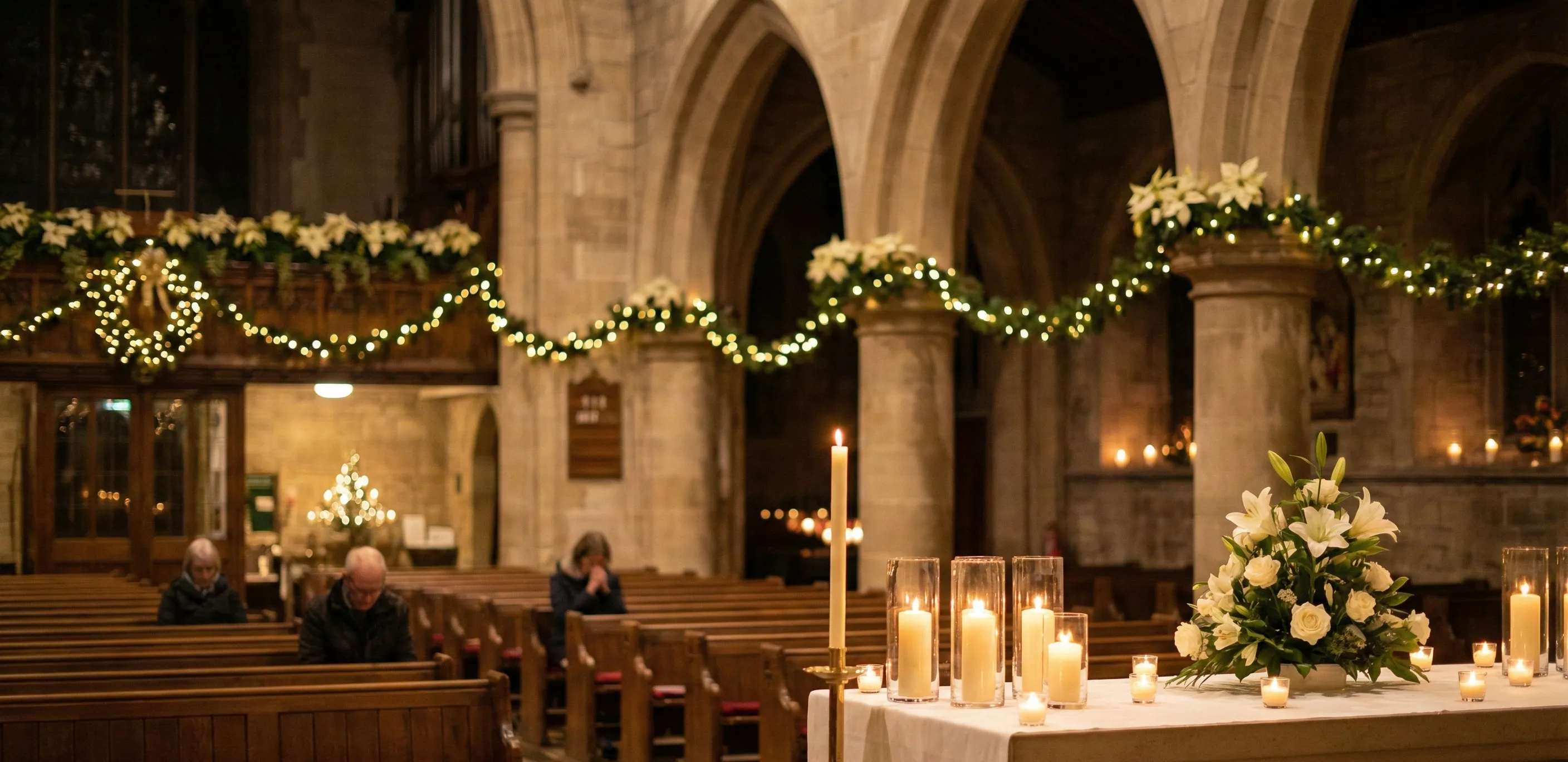
Barcelona Cathedral, the Sagrada Família and neighbourhood churches hold special services. Even if you do not attend, passing by them on this day feels meaningful.
Christmas Markets
The Santa Llúcia Market beside the Cathedral reaches its most charming moment of the year. You find handmade decorations, nativity figures, Caganers and Caga Tió logs everywhere.
For Camino students, it is just a short walk after class.
City Rhythm
Shops adjust their hours, supermarkets close early and tourist attractions run special schedules.
It is a public holiday, so Barcelona slows down, yet somehow feels more alive.
What Students Usually Do on This Holiday
If you are studying at Camino Barcelona, the 8th gives you many options.
Some students spend the day exploring the Santa Llúcia Market.
Others visit the nativity scene at Plaça Sant Jaume.
Many enjoy their first neules or torró of the season.
Some take day trips to Girona, Sitges or Montserrat.
Others head to the Pyrenees for early ski conditions.
Plenty simply walk through the decorated streets, absorbing the holiday atmosphere.
It is a relaxed, joyful introduction to the Christmas spirit in Catalonia. It is also exactly the type of immersion that helps your Spanish improve naturally.
Why Catalan Traditions Stand Out
Catalonia celebrates Christmas with traditions that feel both ancient and spirited. The most iconic are the Caganer and the Caga Tió.
If you are studying Spanish in Barcelona, these traditions are not only interesting; they are unforgettable.
They show you that you are not just in a new country. You are inside a living culture.
The Caganer Tradition
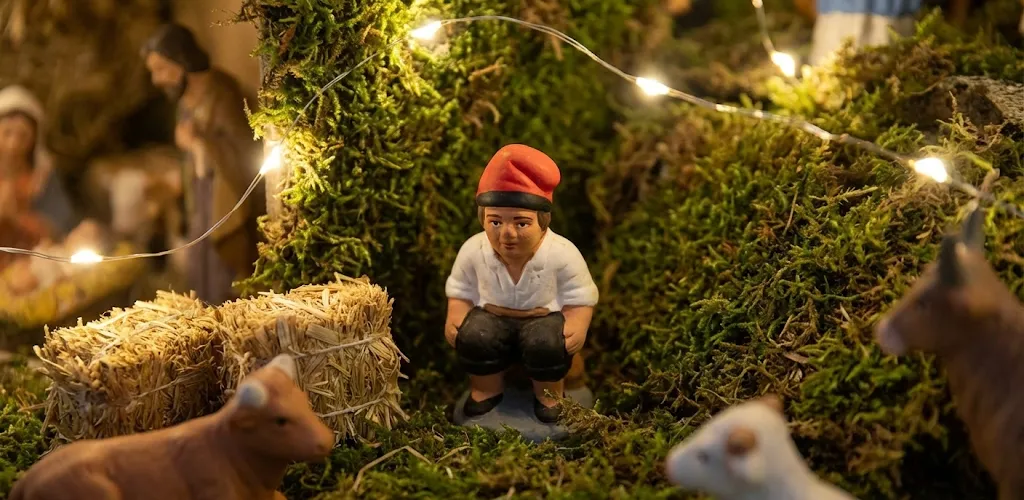
If you haven’t spotted it yet, you soon will: a small figurine hidden in the nativity scene. The Caganer, wearing a red barretina, is one of Catalonia’s most charming customs. It began as a symbol of prosperity and humility, and today appears as celebrities, athletes and fictional characters. On 8 December, families hide it among miniature villages and children search for it, turning the nativity into a warm, humorous game.
The Caga Tió Tradition
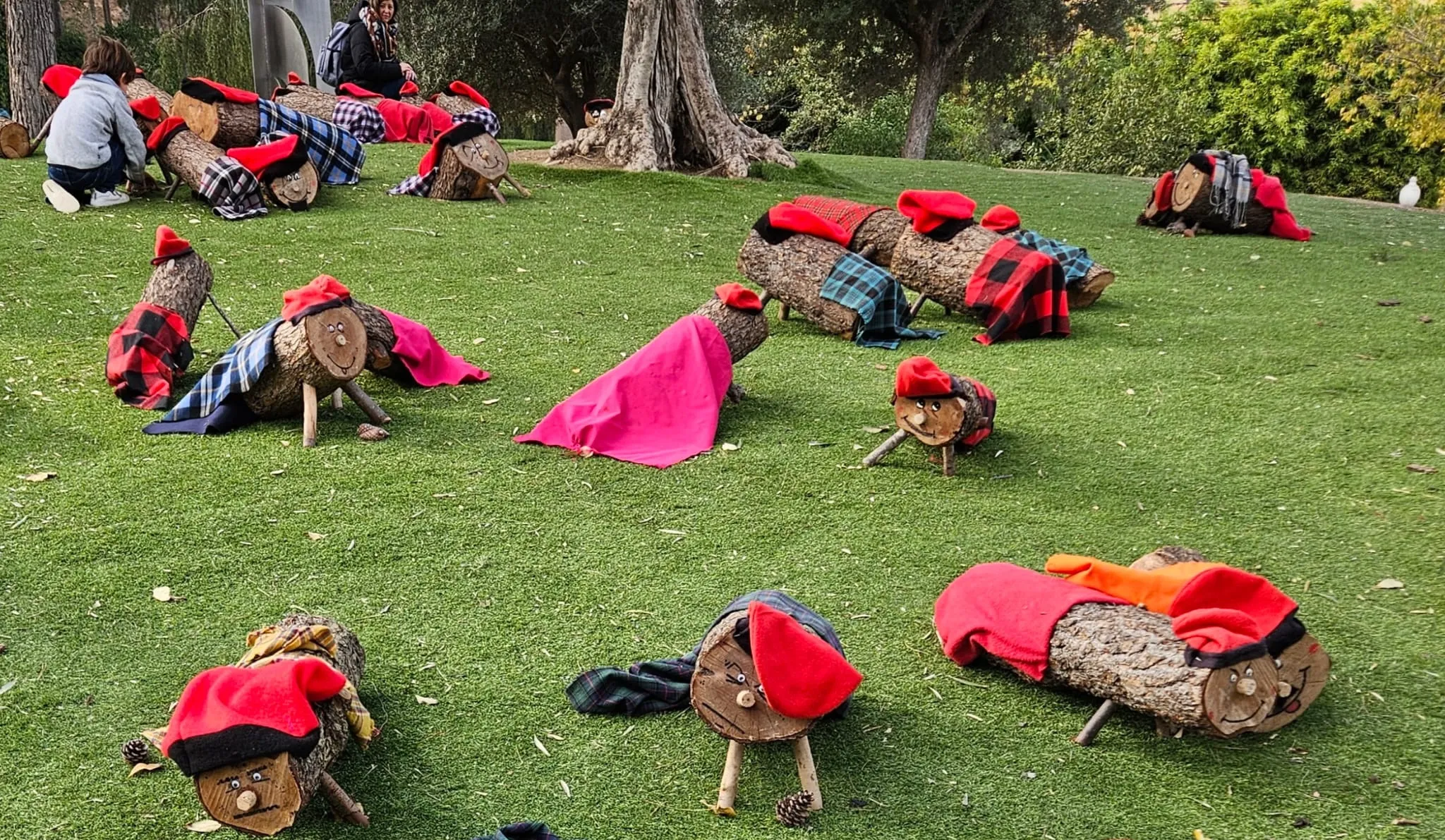
Then there is the Caga Tió, a wooden log with a cheerful face and red blanket. From 8 December until Christmas Eve, children care for the Tió, keeping it warm and feeding it small treats. The ritual symbolises affection and the growing joy of the season. On the 24th, families sing songs and gently tap the Tió until it gives small presents. It’s a sweet, lively tradition, and you’ll see Caga Tiós across Barcelona’s markets in December.
Where to See These Traditions in Barcelona
As a Camino student, you’ll spot these traditions all over the city: the Santa Llúcia Market with its Caganers and Caga Tió logs, the large nativity at Plaça Sant Jaume, artisan shops in the Gothic Quarter, Christmas floors in El Corte Inglés, and neighbourhood markets full of decorations. In December, Barcelona feels like an open-air Christmas museum.
Quick Vocabulary Guide
You will hear these words often throughout the day:
Immaculada: Feast of the Immaculate Conception
Pessebre: Nativity scene
Caganer: Humorous nativity figurine
Caga Tió or Tió de Nadal: Traditional Catalan Christmas log
Barretina: Traditional Catalan hat
These are great words to practise with locals, teachers and classmates.
Learn Spanish and Experience Catalan Traditions With Us
What makes the 8th of December special is not just the holiday itself, but how it feels to be in Barcelona on this day. When you study Spanish at Camino Barcelona, you are not only learning grammar or vocabulary, you step outside after class and walk straight into living tradition. You begin to recognise cultural references, holiday humour, and the way the city celebrates around you.
If you are not studying at Camino yet, this season is one of the best moments to join. Every day at Camino Barcelona feels like a great deal, because the culture you absorb and the experiences you collect stay with you long after December ends. When you learn Spanish in Barcelona during the festive season, Christmas doesn’t just surround you. It welcomes you.